


.

An industrial network can work perfectly during testing and still become troublesome after it is put into operation. The reason is often not the switch itself. Distance, electrical interference, temperature, cable routing, and the installation environment can all affect how reliably data moves between devices.
This is particularly common when Ethernet networks extend beyond a single control cabinet or production area. A factory may have cameras in one building, controllers in another, or monitoring equipment installed some distance away. Running everything over copper is not always practical, especially when the network passes through areas with heavy electrical equipment.
In these situations, fiber connectivity can make the network easier to build and more reliable in day-to-day operation. An industrial media converter is often the simple piece of equipment that makes this possible.
The Network Cable Can Be the Weak Point
When people talk about network reliability, they usually think about switches, routers, or servers. The physical connection is sometimes overlooked.
In an industrial environment, however, the cable and transmission medium matter quite a lot. Copper Ethernet is convenient and widely used, but longer connections can become more difficult to manage. The surrounding environment can also be a concern when cables run close to motors, power equipment, or other sources of electrical interference.
Fiber provides a different approach.
Instead of carrying the Ethernet signal electrically over the entire distance, a fiber link carries the data as an optical signal. This makes it much less affected by electromagnetic interference and gives engineers more flexibility when connecting equipment that is physically far apart.
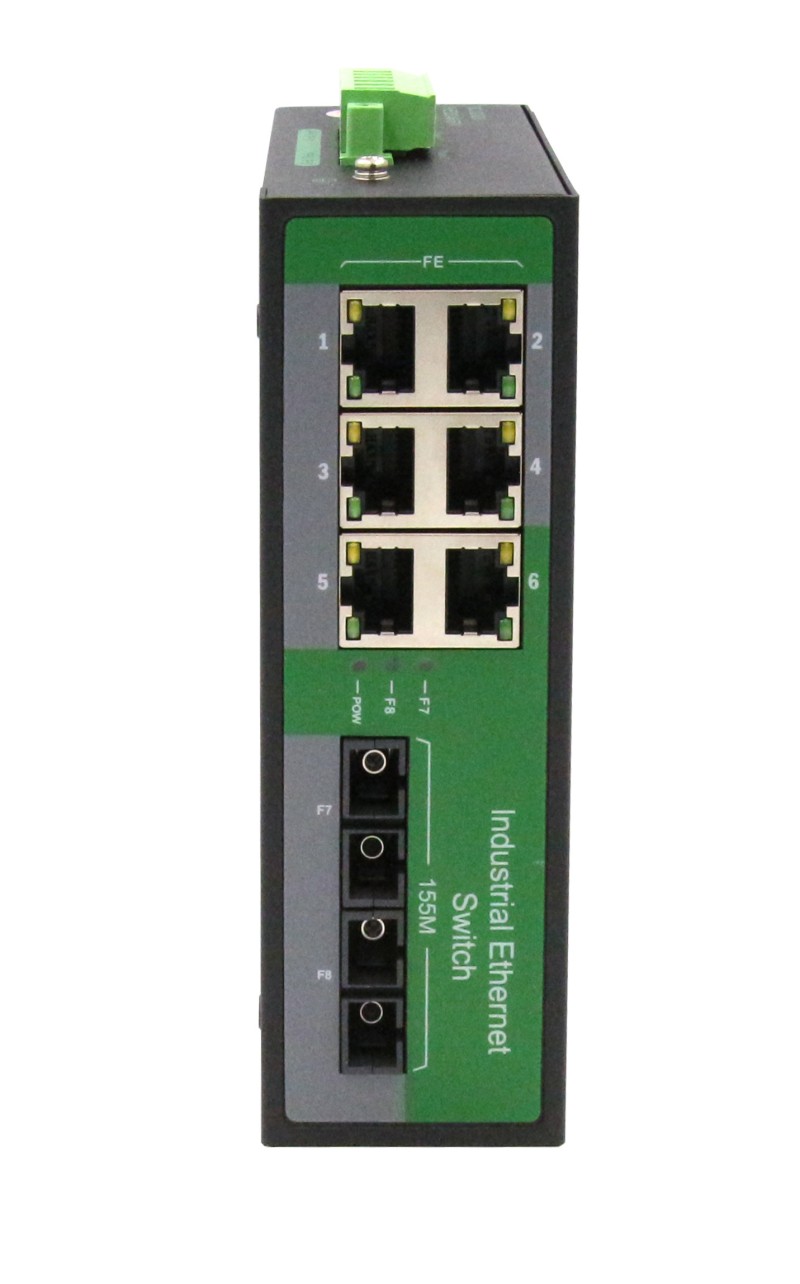
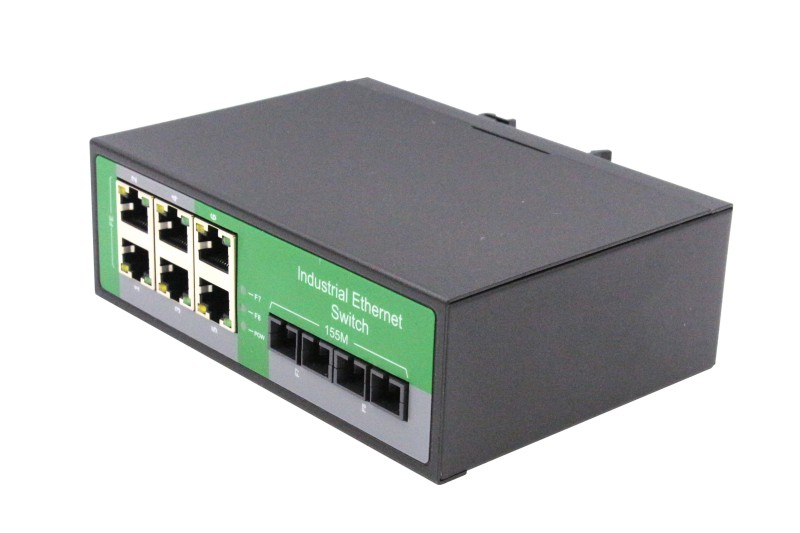
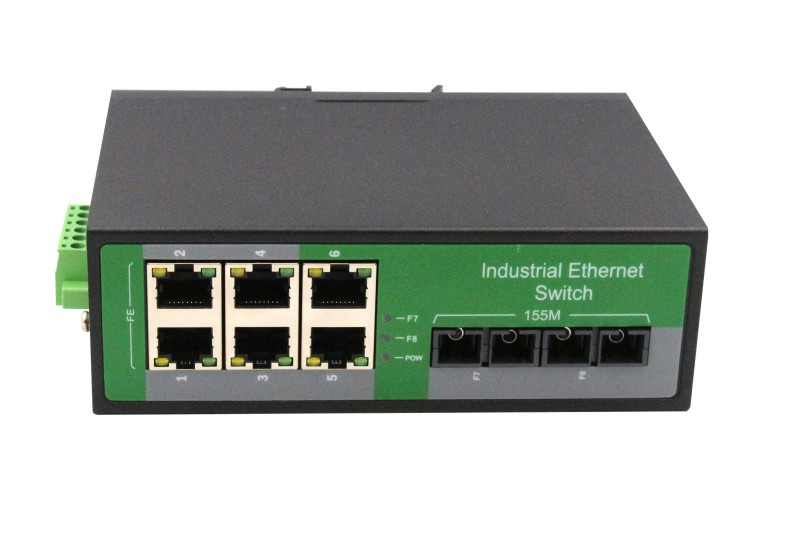
That is one reason Industrial Ethernet Switch installations often use fiber as part of the wider network rather than relying entirely on copper connections.
When Does Fiber Become a Practical Choice?
There is no need to replace every copper connection with fiber. For devices that are close together, standard Ethernet over RJ45 is often perfectly adequate.
The situation changes when the distance increases.
Imagine an industrial site where the main network cabinet is located in a control room and a group of cameras or monitoring devices is installed 1 km away. Extending a copper connection that far is not a normal Ethernet application. Even if a longer physical connection could be engineered, it would not necessarily be the most sensible way to build the network.
A 10/100Base-TX to 100Base-FX Industrial Media Converter provides a much cleaner solution. The local device can continue using its RJ45 Ethernet interface, while the longer section of the connection runs through fiber.
The Yuhang ZXRL26F series is designed for this type of application. The ZXRL26F-SC2 can extend communication distances up to 2 km, while the ZXRL26F-SC20 supports distances of up to 20 km.
This is useful for factories, outdoor installations, traffic control systems, and other distributed networks where Ethernet devices are not all located in the same place.
Electrical Interference Is Hard to Avoid on Some Sites
A factory floor is not an office.
There may be motors starting and stopping, power equipment switching loads, drives operating nearby, and large electrical systems sharing the same space. Traffic control cabinets can face similar challenges, particularly when networking equipment is installed alongside electrical infrastructure.
This is where the difference between commercial and industrial networking equipment becomes more noticeable.
The Yuhang ZXRL26F series is built with durable components and a strong housing for electrically harsh and climatically demanding environments. It also provides a high level of immunity to electromagnetic interference and heavy electrical surges.
The benefit is fairly straightforward: the network equipment has to keep doing its job even when the surrounding environment is not particularly friendly to electronics.
Fiber also helps on the communication side because the optical link itself is not affected by electromagnetic interference in the same way as a copper connection.
So in a demanding installation, both the transmission medium and the equipment used to connect it need to be considered.
Temperature Is Part of Network Reliability Too
Temperature is another issue that can easily be missed during the planning stage.
A switch or media converter installed in a temperature-controlled room has a relatively easy operating environment. The same device installed inside an outdoor traffic cabinet or close to industrial machinery has a very different job.
For this reason, an Industrial Media Converter needs to be selected according to the actual site conditions rather than just its Ethernet specifications.
The Yuhang ZXRL26F series is designed to operate from -40°C to 75°C. That range gives system integrators considerably more flexibility when installing the equipment in outdoor cabinets, factory environments, or other locations where temperatures can vary significantly.
It is a specification that may not attract much attention during procurement, but it becomes important when equipment has to remain in operation throughout the year.
Stable Communication Is More Important Than Simply Extending Distance
Long-distance communication is only useful when it remains stable.
For example, extending a surveillance network over several kilometers does not solve much if the connection becomes unreliable whenever the surrounding electrical conditions change. The same applies to control or monitoring systems where intermittent communication can be much harder to troubleshoot than a complete network failure.
The ZXRL26F series is designed to provide stable fiber performance while converting data between 10/100Base-TX and 100Base-FX.
It supports 10/100Mbps Ethernet through the RJ45 interface and uses fiber for the extended connection. This allows existing Ethernet equipment to remain in the network without requiring every device to be replaced with a fiber interface.
For system integrators, that can make a network upgrade considerably simpler.
A Media Converter Does Not replace the Switch
It is worth making a distinction here.
An Industrial Ethernet Switch and an Industrial Media Converter do not perform the same function.
The switch connects multiple network devices and provides the switching infrastructure for the local Ethernet network. A media converter is used when the physical transmission medium needs to change—for example, from copper Ethernet to fiber.
In a real industrial network, the two can work together.
A switch may sit inside a control cabinet and connect PLCs, cameras, controllers, or other Ethernet devices. A media converter can then provide the fiber connection from that local network to another building, production area, roadside cabinet, or remote monitoring point.
This approach is particularly useful when an existing network is already based on copper Ethernet but a longer fiber connection needs to be added.
This Is Where Industrial-Grade Hardware Matters
It is easy to focus on the maximum transmission distance when comparing media converters. In an industrial project, that is only part of the decision.
The equipment may have to operate continuously, deal with electrical noise, tolerate temperature changes, and fit inside a cabinet where space is limited.
The ZXRL26F series is designed around those practical requirements. Its durable construction and strong housing are intended for harsh installations, while the -40°C to 75°C operating range makes it suitable for environments that would be unsuitable for many standard commercial networking devices.
The design is less about adding unnecessary features and more about making the equipment suitable for where it is actually going to be installed.
Where Can the ZXRL26F Series Be Used?
The series can be used in a range of applications where copper Ethernet needs to be extended through fiber.
For industrial Ethernet networks, it can connect local RJ45 equipment to a longer fiber link. In surveillance projects, it can be used to connect cameras or monitoring equipment located some distance from the main network. It can also be used in traffic control cabinets, outdoor communication systems, and other installations where electromagnetic interference and temperature need to be taken seriously.
The available distance also gives engineers some choice when planning the network. The ZXRL26F-SC2 is suitable for links up to 2 km, while the ZXRL26F-SC20 extends the possible distance to 20 km.
The right model depends on the actual network layout and fiber infrastructure rather than simply choosing the model with the longest specification.
What Should Be Considered When Building a Reliable Industrial Network?
There is no single specification that determines whether an industrial network will be reliable.
It is better to look at the entire connection.
First, consider the distance between network devices. If the connection is beyond the practical range of copper Ethernet, fiber should be considered. Then look at the environment. If the equipment is close to heavy electrical systems, EMI and surge immunity become important. For outdoor or exposed installations, the operating temperature range and physical construction also need to match the site.
The network architecture matters as well. A suitable Managed Industrial Ethernet Switch may be needed for network segmentation and traffic management, while an industrial media converter can handle the transition between copper and fiber.
These decisions are closely connected. Choosing the right switch but the wrong transmission medium can still leave a weak point in the network.
Yuhang ZXRL26F Series for Long-Distance Industrial Ethernet
Yuhang's ZXRL26F series Industrial Media Converter is designed for applications where standard copper Ethernet needs to be extended through fiber without replacing the existing Ethernet equipment.
The series converts 10/100Base-TX to 100Base-FX, supporting Ethernet connections through RJ45 while providing stable fiber communication. The ZXRL26F-SC2 supports distances of up to 2 km, and the ZXRL26F-SC20 can extend communication up to 20 km.
The series is also designed for difficult operating conditions. Durable components, a strong housing, high immunity to electromagnetic interference and electrical surges, and an operating temperature range of -40°C to 75°C make it suitable for demanding industrial and outdoor applications.
For Yuhang, the focus is not simply on making an Ethernet connection reach farther. The equipment is designed to help engineers build connections that remain practical in places where distance and environmental conditions are part of the problem.
Reliability Comes From the Details
An industrial network does not become reliable because of one specification.
The switch, cable, fiber link, power system, installation environment, and network architecture all play a role. Sometimes the problem is traffic management. Sometimes it is distance. In other cases, the real issue is electromagnetic interference or equipment operating in temperatures far outside a normal office environment.
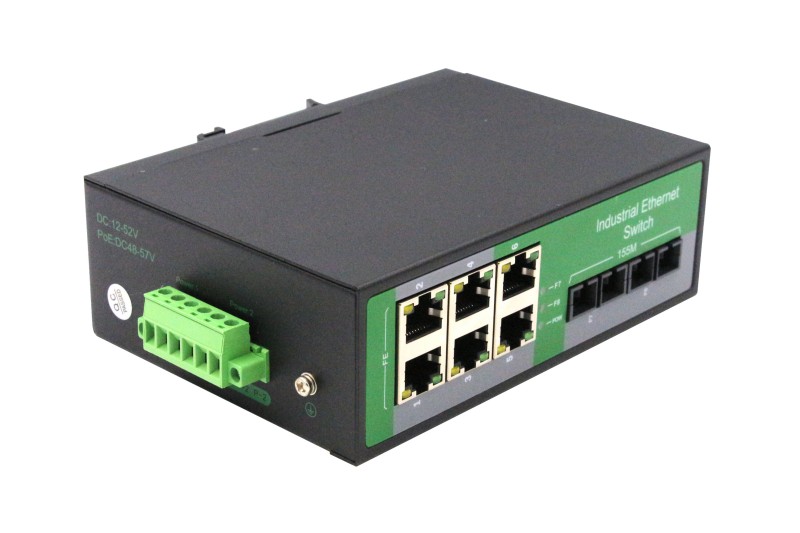
That is why an Industrial Ethernet Switch often needs to be considered together with the physical communication link.
By converting 10/100Base-TX Ethernet to 100Base-FX fiber, the Yuhang ZXRL26F series provides a straightforward way to extend Ethernet communication while avoiding some of the limitations of long copper connections. With models supporting up to 2 km and 20 km, along with industrial-grade construction and a -40°C to 75°C operating range, it can fit into a variety of demanding network environments.
For engineers working on industrial Ethernet projects, the practical question is not simply how fast the network can run. It is whether the connection can continue to work reliably after the system leaves the test bench and starts operating in the real world.